Shards of Order Redraw Timer & Combat Queue
Launch redraw rules tie to real time spent — and queuing lets you plan ahead of animations.
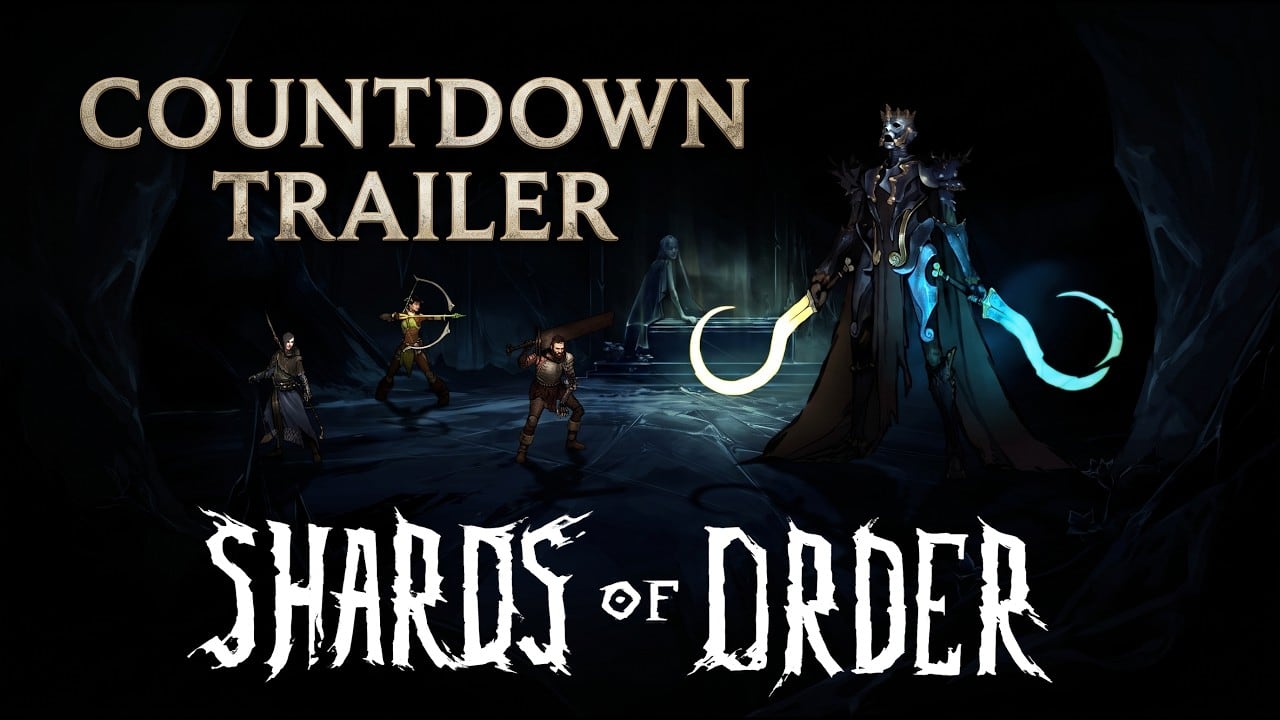
Two launch systems reshape how Shards of Order feels compared to the Steam demo: the redraw timer and the combat queue. Fardust and Awaken Realms raised the redraw baseline, tied reduction to actual time spent on cards and movement, and let players line up sequences before animations finish. If you learned the demo by spamming cheap cards with older redraw logic, full release on July 28, 2026 will punish that habit — especially alongside Fracture stacks documented in Laws and Fracture.
This guide sits between Combat System fundamentals and practical deck tuning in Deckbuilding and Builds. Use the Deck Calculator when testing how many high-cost cards your list can afford under launch redraw rules.
Redraw timer at launch: baseline of four
At full release, the redraw timer starts at 4. When the timer hits zero, the party redraws from the shared deck — and under Fracture, each stack adds 6 damage per hero on every redraw (up to 18 damage at three stacks). That makes redraw timing a survival skill, not a convenience button.
The demo encouraged different habits. Early builds favored cheap card spam because redraw reduction followed older demo rules that did not mirror launch pacing. Launch ties reduction to time that actually passes during your actions.
Time-linked reduction: cards and movement
Every card cost maps directly to redraw relief. A cost-3 card reduces the redraw timer by 3 because three units of time genuinely elapsed. Low-time cantrips still matter, but they no longer trivially cycle the deck the way demo veterans remember.
Movement costs 1 time and also reduces the redraw timer by 1, the same as playing a one-cost card. Repositioning is never free in launch combat — it advances enemy countdowns, spends real time, and pulls redraw closer. Factor movement into sequences the way Combat System describes for boss fights in the Boss Guide.
Practical pacing:
- Plan sequences that spend enough time to delay redraw without hitting zero mid-recovery.
- Avoid movement spam when a single step achieves adjacency — each step is redraw progress.
- Weight deck curves toward cards whose time costs align with the tempo you need, not only raw damage.
Demo versus launch redraw economy
| Aspect | Demo tendency | Launch rule |
|---|---|---|
| Redraw baseline | Lower effective pressure in practice | Timer starts at 4 |
| Cost linkage | Cheap-card loops felt stronger | Reduction equals actual time spent |
| Movement | Cost time on countdowns | Also reduces redraw by 1 |
| Fracture pairing | Limited exposure | Redraws hurt at 6/12/18 per hero |
Re-read Demo Changes for the full changelog and Launch Day for day-one checklist items.
Combat queue: plan before animations finish
Launch adds combat queue depth beyond demo stop-and-start flow. You can queue cards in sequence while earlier actions still animate, preparing the next segment before the time counter visually settles. Faster fights reward players who read telegraphs and commit follow-ups early instead of waiting for each resolution.
Queue discipline matters for all three permanent heroes — Soldier, Scholar, and Exile:
- Soldier — Queue guards before rage spenders when a fast enemy tick threatens mid-animation.
- Scholar — Setup spells that proc on ally damage must sit before finishers that consume the mana they generate.
- Exile — Hold arrow finishers until Scholar strips armor or Soldier exposes the target; premature queue commits waste burst.
The queue does not remove countdown pressure. Every queued card still spends time and advances enemy timers when it resolves — it only removes dead air between decisions.
Interaction with Fracture and deck bloat
Redraws under Fracture are party-wide punishment. Combine that with a clogged shared deck — revive cards left unused, redundant finishers, or demo-era bloat — and you redraw into hands that cannot stabilize before the next timer zero.
Mitigation paths:
- Minimize knockouts so revive cards do not sit dead in the pile (Laws and Fracture).
- Trim lists using Deckbuilding band targets.
- Simulate card counts with the Deck Calculator before launch night.
Launch checklist for redraw and queue
- Play the demo once more with launch assumptions — no cheap-card redraw loops.
- Practice three-card sequences that spend time deliberately, not accidentally.
- On first launch fights, queue defensive tools first, then damage.
- Track redraw timer UI alongside enemy countdowns — whichever hits zero first defines the crisis.
- Read Getting Started if you skipped the demo entirely.
Related pages
- Combat System — time counter and demo vs launch summary
- Laws and Fracture — stack math and revive clogging
- Deckbuilding — shared deck trimming
- Builds — launch party curves
- Deck Calculator — list simulation
- Launch Day — July 28, 2026 checklist
Frequently Asked Questions
Quick answers to the most common questions.
What is the launch redraw timer in Shards of Order?
The redraw timer starts at 4 at full release. When it reaches zero, the party redraws from the shared deck.
How do card costs affect redraw at launch?
Reduction is tied to time that actually passes. A cost-3 card reduces the redraw timer by 3 because three time units were spent.
Does movement affect the redraw timer?
Yes. Movement costs 1 time and reduces the redraw timer by 1, the same as a one-cost card.
How is launch redraw different from the demo?
The demo favored cheap-card spam under older redraw rules. Launch uses a timer of 4 with time-linked reduction and pairs with Fracture damage on redraw.
What does the combat queue do?
You can queue card sequences before animations finish, enabling faster pacing than the demo stop-and-start flow.
Where do Fracture stacks fit in?
Each Fracture stack adds 6 damage per hero on every redraw, up to 18 at three stacks. See Laws and Fracture for revival rules.