Shards of Order Laws & Fracture Explained
Restore laws to reshape rules — and manage Fracture before redraws hurt your party.
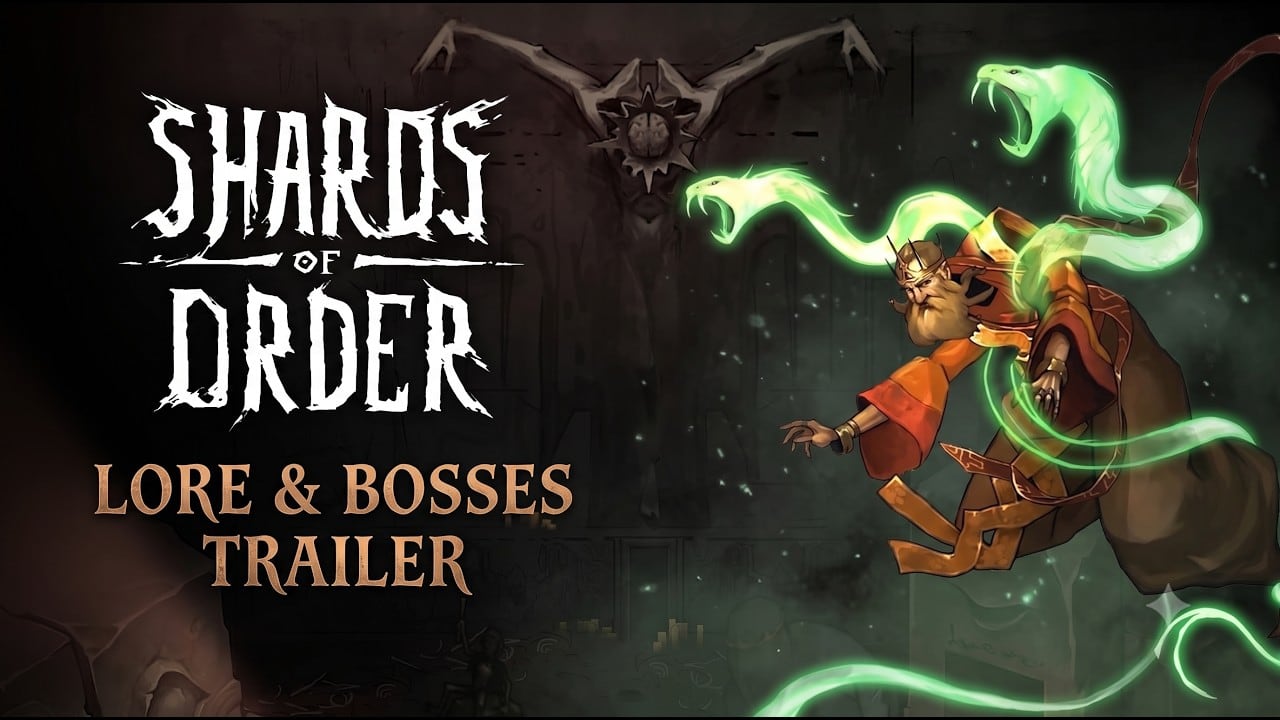
Law restoration and Fracture are two of the most distinctive systems in Shards of Order, the dark fantasy card RPG from Fardust and Awaken Realms (Steam PC, July 28, 2026 at 6 PM CET). They connect narrative — gods meddling through mischief-themed interference — to mechanics that change how combat, exploration, and deck management behave. Launch locks in Fracture math that demo players only partially felt; understanding exact stack numbers clarifies why knockouts, revive card clutter, and draw discipline matter across three full regions.
This guide links lore context on the Wiki with launch-confirmed mechanics. For redraw pacing that triggers Fracture damage, see Redraw and Queue; for combat fundamentals, see Combat System.
What is law restoration?
The world of Shards of Order operates under Laws — rules that govern combat constraints, map behavior, and progression gates. Restoring laws reshapes those rules, acting as both campaign milestone and build-defining choice. Unlike a roguelite mutating a single run, law changes persist in this persistent RPG structure — no permadeath wipe resets your legal framework.
Full release spans three unique regions with handcrafted bosses. Encounters that feel unfair often reflect God mischief — divine actors tampering with order. Player-driven restoration counters that meddling over time, altering how Combat System constraints apply. The demo hints at law themes through boss rule bends; launch exposes restoration as a core loop — expanded in Regions and the Boss Guide.
Player takeaway: When an encounter violates expectations — extra countdown acceleration, unusual draw pressure — treat it as possible law interference rather than random difficulty spikes.
Gods and mischief theme
Awaken Realms’ dark fantasy framing positions gods as active troublemakers, not distant lore text. Mischief manifests in:
- Rule exceptions during elite and boss fights across regional gatekeepers.
- Narrative beats connecting demo routes to full campaign arcs on Demo Walkthrough.
- Foreshadowing of player-driven restoration as you explore beyond the single demo dungeon.
Mechanically, restored laws alter time costs, redraw thresholds, or knockout penalties. Track launch notes on Launch Day and Release Date.
Knockouts, crippled state, and persistence
When a hero falls:
- They enter a crippled state — still in party but weakened.
- Revive card costs increase with repeated knockouts on that hero.
- Progress persists — revisit nodes, adjust gear per Deckbuilding, re-engage.
This is intentionally anti-roguelite: failure taxes resources without deleting map progress. Law restoration may modify crippled rules post-launch, but demo and launch both reward minimizing knockouts before Fracture stacks accumulate.
Fracture stacks — launch numbers
Fracture is a stacking consequence tied to revival and redraws. Launch confirms exact behavior:
- Revive adds 1 Fracture stack each time you bring a fallen hero back.
- Each stack makes every redraw deal 6 damage to each of the three party members.
- Maximum 3 stacks = 18 damage per hero on every redraw.
- Visual cues ramp with stack count — higher Fracture means clearer UI warning before you cycle the deck.
Fracture pairs with the launch redraw timer of 4 and time-linked reduction described in Redraw and Queue. When the timer hits zero, the party redraws — and Fracture turns that redraw into party-wide chip damage scaled by stacks.
Unused revive cards clog the deck
Revive cards left unused sit in the shared party deck alongside Soldier, Scholar, and Exile tools. A clogged library means:
- More dead draws when you need guards or Scholar setup.
- Higher odds of redraws under Fracture pressure.
- Slower stabilization after boss attempts documented in Boss Guide.
Plan revives deliberately; sometimes the correct play is defensive recovery before knockout, not stocking unused revive tools that bloat the pile.
Why Fracture matters before launch
Habits from demo cheap-card spam under older redraw rules do not transfer cleanly. Launch ties redraw reduction to actual time spent — a cost-3 card reduces the timer by 3 — so cycling the deck happens on a different clock than early demo builds. Combine that with 6/12/18 damage per redraw and revival stacks become a long-run survival tax, not a one-fight footnote.
Build discipline early:
- Prefer deterministic sequences over fishing for perfect hands.
- Invest in injections that add consistency per Items and Cards.
- Validate lists on Deck Calculator and Builds.
How laws, fracture, and deckbuilding interact
Shared party decks across Soldier, Scholar, and Exile mean law changes and Fracture hit everyone simultaneously. If a restored law reduces draw costs, the whole party benefits. If Fracture punishes redraws, Scholar mana setups needing extra cycles suffer disproportionately.
Strategic layering:
- Minimize revives to keep stacks low and revive cards out of the deck.
- Align card time costs with redraw pacing from Redraw and Queue.
- Rank heroes on Tier List with law sensitivity once full lists stabilize post-launch.
Demo versus full release
| System | Demo exposure | Launch behavior |
|---|---|---|
| Law restoration | Thematic hints, boss rule bends | Player-driven rule reshaping across three regions |
| God mischief | Narrative + encounter exceptions | Expanded divine interference |
| Knockouts / crippled | Fully active | Same persistence model |
| Fracture stacks | Partial / preview | 1 stack per revive; 6 dmg/redraw/stack; max 3 |
| Revive deck clog | Less emphasized | Unused revive cards bloat shared deck |
Read Demo Changes for the feedback-driven rework summary.
Practical checklist
- Finish demo with minimal knockouts to learn revive economy cleanly.
- Document encounters that felt like “broken rules” for future law guides.
- Study launch redraw rules before July 28 — Launch Day checklist.
- Practice queue sequencing so revives happen less often mid-fight.
Related pages
- Redraw and Queue — redraw timer 4 and time-linked reduction
- Combat System — time counter and demo vs launch
- Regions — three regions and law gates
- Getting Started — install and first run
- Guides hub — all topics
Frequently Asked Questions
Quick answers to the most common questions.
What is law restoration in Shards of Order?
Law restoration reshapes the world's rules, affecting combat and progression across three regions. Gods meddling with order ties into the mechanic narratively.
What does Fracture do at launch?
Each revive adds 1 Fracture stack. Every stack makes redraws deal 6 damage to each hero, up to 18 damage at 3 stacks.
Can unused revive cards hurt my deck?
Yes. Revive cards left unused clog the shared party deck, increasing dead draws and redraw pressure under Fracture.
How do knockouts relate to Fracture?
Knockouts cause crippled state and higher revive costs. Each revive adds a Fracture stack that punishes future redraws with party-wide damage.
Does the demo show full Fracture math?
The demo previewed Fracture themes but launch confirms exact stack numbers and redraw damage scaling.
Where can I learn redraw rules paired with Fracture?
Read Redraw and Queue for the launch timer of 4 and time-linked reduction that triggers redraws.